
ROB RUN Money Guide: Fast Cash, Cargo & Laundering
How to make money in ROB RUN: the six income routes, what each one costs to start, where the cash leaks, and when to bank or launder it.
Quick answer. The fastest first income is a small store robbery sold at a fence. The best repeatable income is cargo hauling with a rented plot, and the safest long-term income is base production plus a settlement cut. Bank cash before every shopping trip, and launder it before the weekly wipe.
- Robbery pays immediately but scales with risk.
- Cargo hauling pays reliably once you know a route.
- Base production pays while you are offline.
- Property and territory income is the endgame.
- Banked money is safe from theft, but not from the wipe.

A fence payout in your pocket is loot for the next player who sees you.
The six income routes
| Route | Startup cost | Risk | Best for |
|---|---|---|---|
| Store robbery | A mask and a gun | High | First cash |
| Cargo hauling | Bag space | Medium | Repeatable mid-game income |
| Selling player loot | None | Medium | Opportunistic profit |
| Base production | Plot rent plus facilities | Low | Passive income |
| Police salary | None | Low | Steady, capped income |
| Property and territory cuts | Settlement or clan position | Low to medium | Endgame |
The order matters. Most players try to skip from robbery to property and discover that rent is due before the first production cycle pays out.
Route 1: store robbery
This is the first-hour route. Pick a small store, scout it unmasked, mask up, keep staff at gunpoint, fill one bag and leave. Sell the cargo at the fence van marked with a dollar sign.
The advantage is speed. The disadvantage is that every robbery raises your profile and puts police players on the same street. The heist guide→ explains target selection; the short version is to rob what you can carry, not what looks most valuable.
Do not do a second trip. The second trip is where most new players die with the first bag still in their inventory.
Route 2: cargo hauling
Cargo is the trade route. You move goods from where they are cheap or available to where they sell, or you flip cargo containers for a margin. It is less glamorous than a bank job and more reliable.
The key data is the cargo value table. A Bank Money Bag is tracked at around $60,000, a Portable Safe at around $100,000, and a Unique Collection Crate at around $500,000, but the fence price varies with location and notoriety. Do not assume the base value is what you will be paid.
Cargo also occupies bag space. A high-value item that leaves no room for a second item can be worse than two mid-value items. The loot values page→ has the full list.
Route 3: selling player loot
Players carry gear, cargo and cash. Killing a player is the highest-variance income in the game: sometimes it is a full kit, sometimes it is an empty bag and a wasted fight.
This is not a route to plan around. Treat it as a bonus. If you are chasing player kills for income, you are really playing a PvP game with a money side effect.
Route 4: base production
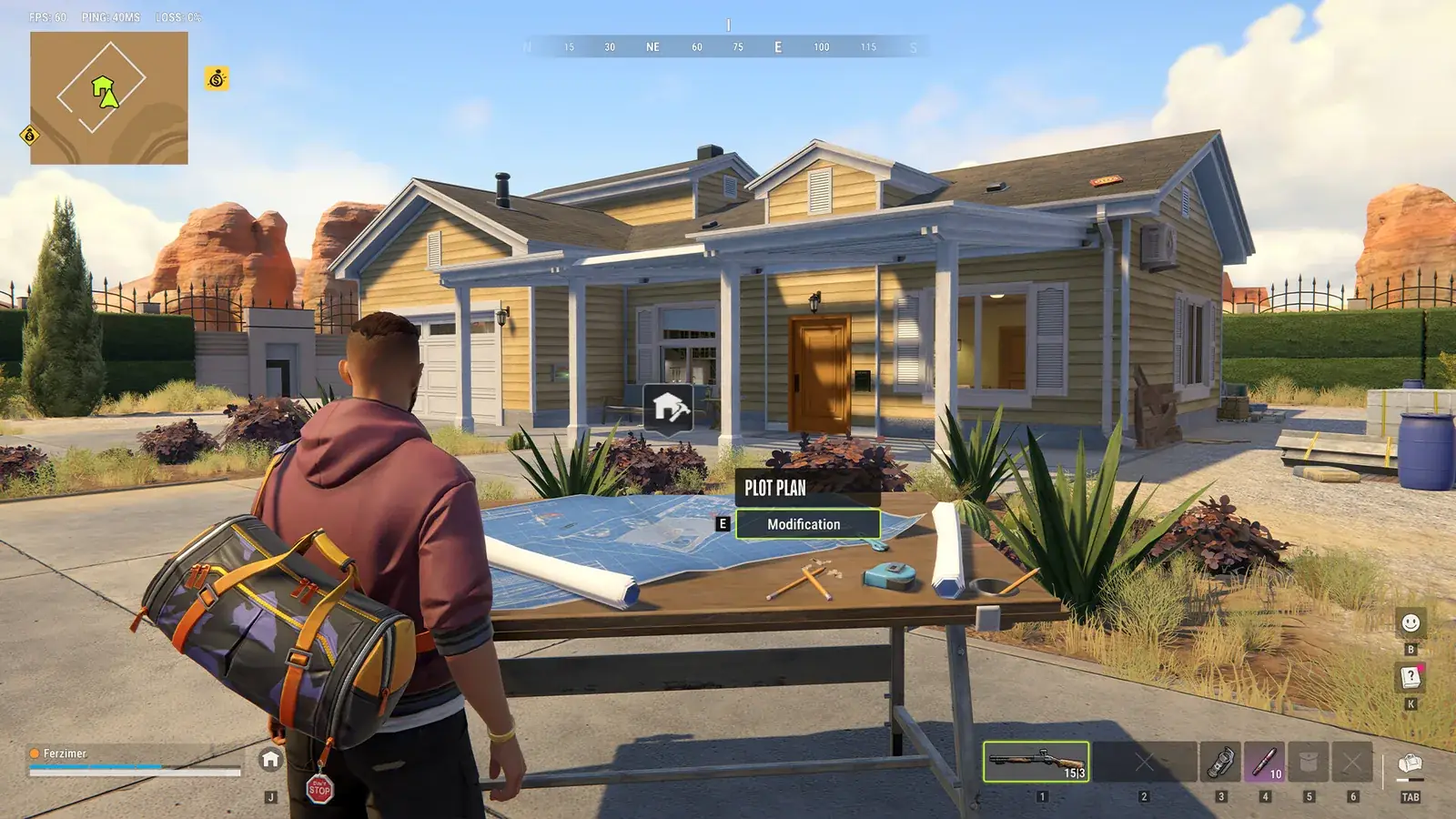
Once you have a plot, production facilities can generate goods while you are elsewhere. Farms, warehouses and laboratories are the tracked facility types, and each one needs to be placed, supplied and protected.
The catch is that a base can be raided. Production is passive income only if the base survives, which means a Security System and fuses are part of the investment, not an optional extra. The base guide→ covers the defence order.
Production is also slow. It is not a way to recover from a bad run today; it is a way to have a better run next week.
Route 5: police salary
Police officers earn from confiscated contraband, arrests and bribes. The income is steadier and lower than criminal work, because the risk is lower and the department supplies the gear.
This is the right route if you want to learn the city without risking a bag. You lose department equipment on death, not personal items, so a bad shift costs time rather than property. The police guide→ covers enlistment and badge progression.
Route 6: property and territory cuts
Settlement owners collect a cut of tenants' spending and laundering. District owners and the Shadow Governor take a cut of the tiers below them. This is the top of the Power Pyramid and the only route that scales without you personally carrying a bag.
It also requires capital and relationships. You cannot rent land in a settlement with no owner, and you cannot buy a settlement without the money and the political position to hold it.
Where the money leaks
Most players do not lose money on bad robberies. They lose it in four quieter ways:
- Rent and taxes. A plot has recurring rent, and settlements take a cut of transactions.
- Death with cash. Cash in your pocket is confiscated or stolen. Bank it.
- Gear replacement. Dying with a Black Market rifle costs more than the cargo was worth.
- The wipe. Anything not converted into jail time or authority at the Federal Raid is gone. Cash included.
The fourth is the one players forget. Banking protects cash from theft, not from the wipe. If the cycle is ending, spend or convert what you can.
The order that works
- Rob one store and sell the cargo.
- Open a bank account and deposit the profit.
- Rent a level 1 plot.
- Place storage and a workbench.
- Add production only after the base can survive a raid.
- Buy better gear only after you have a spare kit at base.
This order is boring, and it is the difference between a player who has a good first day and a player who has a base on day three.
Banking and laundering
Cash has two states: in your pocket or in the bank. Pocket cash can be stolen or confiscated. Banked cash is safe from theft until the wipe, and can be withdrawn at an ATM.
Laundering is the step between criminal cash and usable money. A Laundering Desk at your base takes time but protects the funds until the next wipe. If you are carrying a large amount after a heist, laundering is worth the delay.
The bank and laundering page→ covers account opening, the desk and the wipe interaction.
FAQ
How do I make money fast in ROB RUN?
Rob a small store, sell the cargo at a fence and bank the cash. Repeat with better targets as you learn the exits. Cargo hauling becomes the better repeatable route once you have bag space and a route.
What is the most profitable cargo?
A Unique Collection Crate is tracked at around $500,000, followed by a Golden Statue at around $250,000 and an Expensive Safe at around $200,000. Fence prices vary with location and notoriety.
Is being a cop profitable?
It is steady rather than high. Police earn from confiscated contraband, arrests and bribes, with lower risk because the department supplies the gear.
Does money carry over the wipe?
No. Cash is wiped at the Federal Raid. Cosmetics, name, tutorial progress and accumulated jail time carry over.
Official source: Kefir Help Center, ROB RUN Steam store page and Steam announcements (checked 2026-11-06).
Sources
- Kefir Help Center — How to earn money ↗ — official income routes and banking.
- ROB RUN Steam store page ↗ — free-to-play status and features.
- ROB RUN Steam announcements ↗ — economy changes.