
ROB RUN Police Guide: How to Become a Cop & Get Paid
How to enlist as a ROB RUN cop, earn from arrests and contraband, level badges, take bribes and survive the launch build's police changes.
Quick answer. Enlist at the Looty Bay Police Station when a slot is open. You get issued gear and a patrol vehicle, earn from arrests, confiscated contraband and bribes, and lose only department equipment on death. Badges unlock better kit, but the launch build cut badge income and lengthened cop respawns.
- Police are real players, not NPCs.
- Department gear is issued; personal items stay safe on death.
- Income is steadier and lower than criminal work.
- Badges can now be bought by district.
- Backup calls can give upgraded gear and temporary pay.
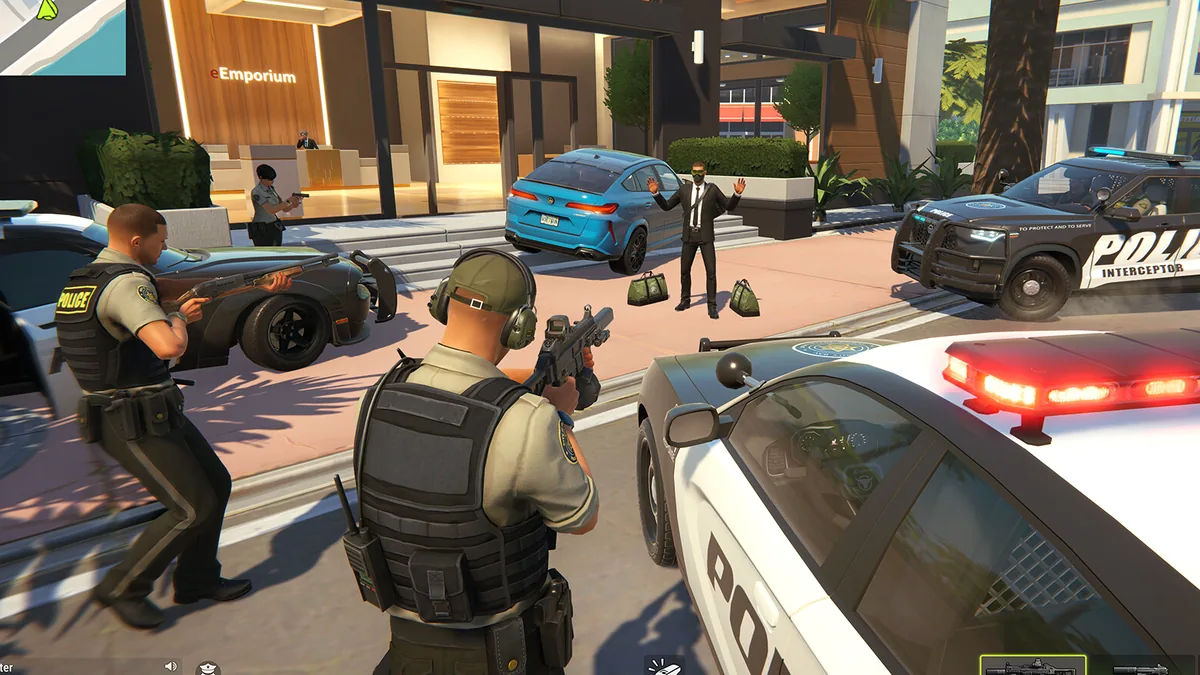
How to become a police officer
The entry point is the Looty Bay Police Station. When the department has open slots, you can enlist there. You are then issued standard equipment and a patrol vehicle.
You do not need to abandon your character or your property. Policing is a role you take for a session, not a separate save. The next time you enter the city you can choose a different role.
The practical checklist:
- Go to the Police Station.
- Check whether a slot is open.
- Enlist and take the issued kit.
- Learn the patrol routes before chasing anyone.
What police earn
Police income has three sources:
| Source | How it works |
|---|---|
| Arrests | Stopping criminals and processing them |
| Confiscated contraband | A share of what is seized |
| Bribes | A criminal offers money to keep their bag; accepting is your choice |
The design intent is that police income is lower than criminal income because the risk is lower. You are not risking your own gear, and the department replaces what you lose. If you want high variance and high ceilings, police work is the wrong side.
The money guide→ compares all six income routes.
Badges and progression
Badges are the police progression track. Higher badges unlock better equipment. The launch build changed how they work:
- Cops can buy police badges by district.
- Badges earned from looting and salary were significantly reduced.
That makes badge progression more deliberate and more local. Do not assume a badge earned in one district carries the same access everywhere. Check what the district offers before you spend.
Death and risk
Police death rules are the most forgiving in the game:
- You lose department-issued equipment.
- You keep personal items and equipment.
That means you can take fights a criminal would avoid. The trade-off is that your loadout is not fully yours; the department decides what you carry.
The launch build also increased cop respawn time, and repeated deaths lengthen it further. Dying is cheap in gear terms and expensive in time terms. Do not treat a police slot as infinite.
Arrest, bribe or shoot
When you corner a criminal, you have three options:
- Arrest. The criminal is processed; you earn from the arrest.
- Accept a bribe. The criminal keeps the bag, you get paid, and the department does not.
- Fight. Sometimes the criminal resists, sometimes another criminal intervenes.
Bribes are a real economy, not a moral test. A bribe is fast, private and does not require transporting a prisoner. An arrest is better for badge progression and department standing, assuming the game rewards the paperwork as much as the capture.
Do not accept a bribe in front of a witness. The criminal's bag is not the only thing that can be confiscated.
The launch build changed cop respawn timing and badge availability. If you are planning a police session around a specific badge or vehicle, check the current build first.
Backup and understaffing
When the department is short-handed, backup calls can give officers upgraded equipment and a temporary pay boost. That makes police play more attractive during off-peak hours.
The practical tactic: respond to backup calls even if you are not near the incident. The upgraded kit is often worth more than the arrest.
How to catch criminals
Criminals have three advantages: they choose the target, they choose the exit and they know the route. Police have two advantages: numbers and respawn.
Use them:
- Patrol the fence routes, not the targets. Criminals expect police at the bank; they do not expect them at the van.
- Watch notoriety. A criminal who has been active longer is more likely to be worth chasing.
- Do not chase into a base. A fortified base is a trap for the officer who follows.
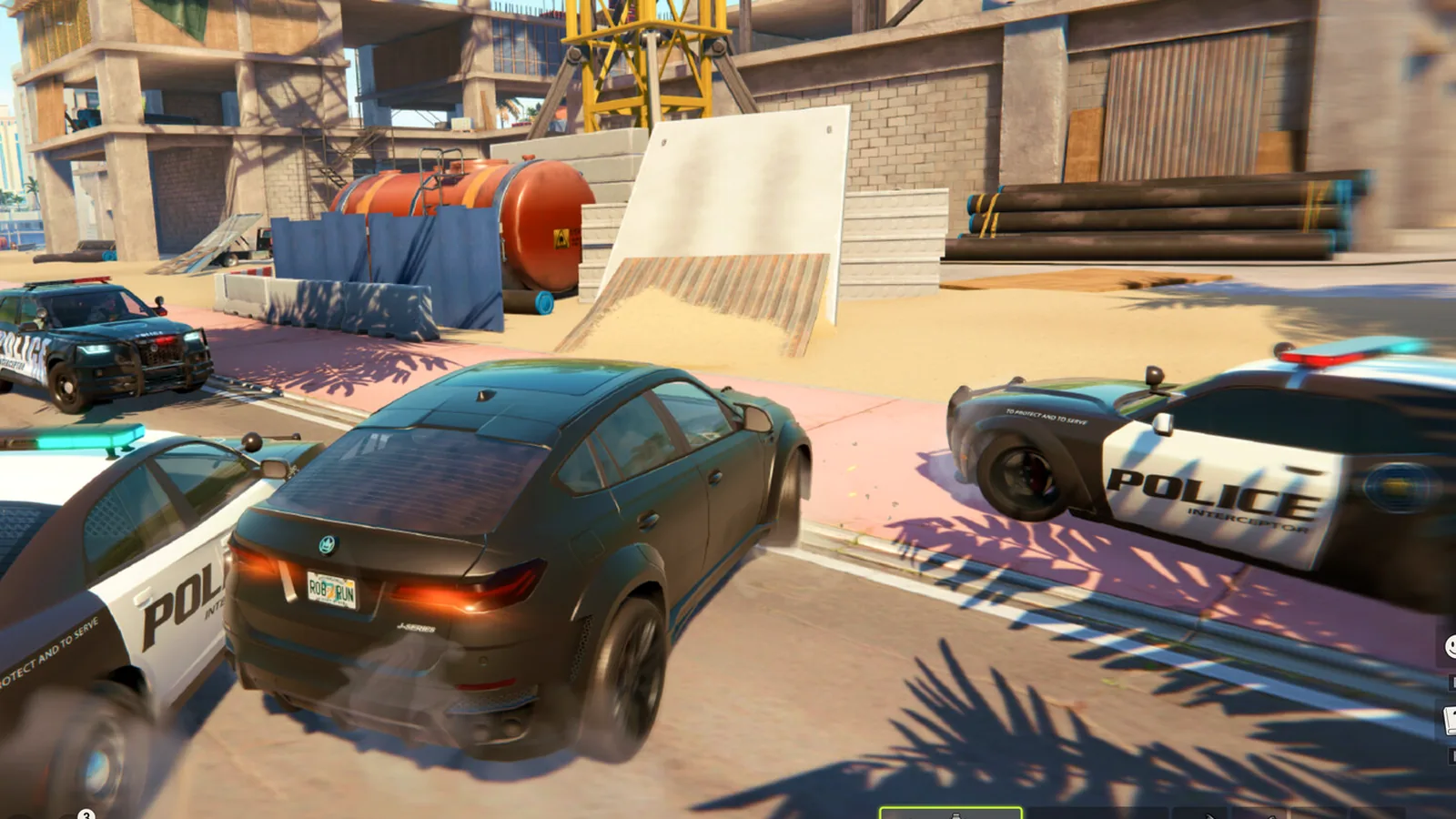
- Use the vehicle. A patrol car turns a chase into a containment problem.
The heist guide→ explains the criminal side of the same encounter, which is useful for predicting routes.
Is police play profitable?
It is steady, not spectacular. Police income is lower than a good heist, but it does not require capital, does not risk your gear and does not depend on a fence.
For a new player, a police shift is a cheap way to learn the city and earn enough for a first plot. For an established player, it is a break from losing bags, not a main income.
FAQ
How do I become a cop in ROB RUN?
Go to the Looty Bay Police Station and enlist when a slot is open. You receive issued equipment and a patrol vehicle.
Do police lose their gear on death?
They lose department-issued equipment but keep personal items and equipment. That makes police death cheaper than criminal death.
How do police make money?
From arrests, a share of confiscated contraband and bribes. Backup calls can also give a temporary pay boost when the department is short-handed.
Can police accept bribes?
Yes. A criminal can offer money to keep their bag, and the officer can accept. It is a legitimate part of the police economy.
Official source: Kefir Help Center, ROB RUN Steam store page and Steam announcements (checked 2026-11-06).
Sources
- Kefir Help Center — How to become a police officer ↗ — enlistment, gear, badges and bribes.
- ROB RUN Steam announcements ↗ — launch changes to cop respawn and badges.
- ROB RUN Steam store page ↗ — official feature list.